
The Ultimate Expert Guide to the Maras Salt Mines: Peru’s Sacred Valley Masterpiece
Author: The TravelYouDo Exploration Team | Category: Uncharted Lands & Hidden Gems | Reading Time: 15-20 minutes
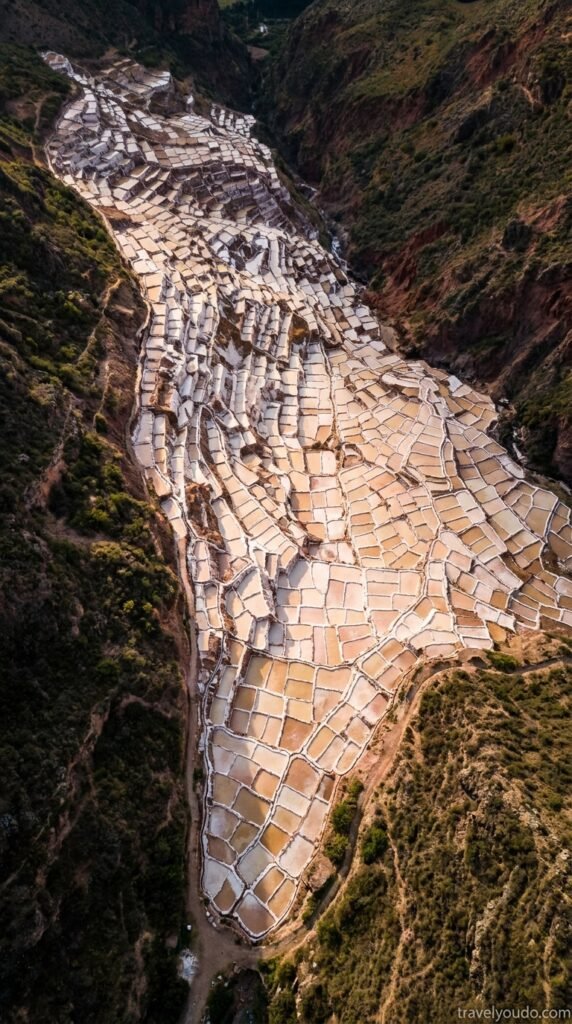
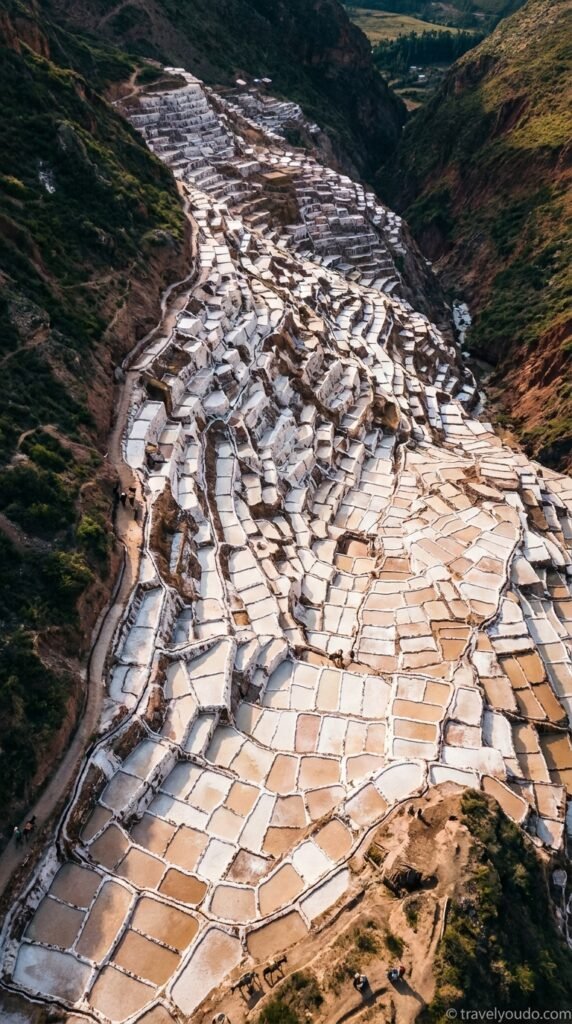
When travelers map out their dream expedition to South America, the itinerary is often dominated by the towering citadel of Machu Picchu or the bustling, historic streets of Cusco. However, hidden deep within the folds of the Andean mountains lies a profound geological and historical anomaly. Welcome to the Salineras de Maras Peru, a blindingly white and terracotta-pink mosaic of over 3,000 artisanal salt evaporation pools cascading down a steep ravine.
Based on our extensive on-the-ground experience curating bespoke journeys throughout the Andes, the Maras Peru salt mines offer an unparalleled window into ancient engineering, enduring local traditions, and the raw power of nature.
In this comprehensive guide, we will uncover everything you need to know about the Maras salt mines Peru, from their mysterious pre-Inca origins and the science behind the subterranean ocean, to planning the ultimate Maras and Moray Peru luxury itinerary.
Table of Contents
- The Enigma of Maras Peru: An Introduction to the Salt Flats
- A Journey Through Time: The Pre-Inca Origins and History
- The Geological Miracle: How the Maras Salt Ponds Peru Work
- The Architecture of the Salineras Maras Peru
- Sal de Maras Peru: The Culinary “Pink Gold” of the Andes
- Community and Stewardship: The Guardians of the Salt
- The Perfect Twin Itinerary: Exploring Maras and Moray Peru
- How to Visit the Maras Salt Mines in Peru: Logistics & Planning
- The Photographer’s Guide to the Maras Salt Flats Peru
- Sustainable Travel: Visiting Peru Maras Responsibly
- The TravelYouDo Bespoke Experience
- Frequently Asked Questions (FAQ)
Located approximately 40 kilometers (about 25 miles) north of the historic capital of Cusco, the town of Maras sits at a breathtaking elevation of 3,380 meters (11,080 feet) above sea level in the Urubamba Valley—better known globally as the Sacred Valley of the Incas.
While the town itself is a quiet, colonial-era settlement adorned with ancient coats of arms carved into stone doorways, the true draw lies just a few kilometers away, hidden within the steep Qaqawiñay mountain canyon. The Maras salt ponds Peru (or Salineras de Maras in Spanish) present a surreal landscape. Imagine thousands of geometric, shallow pools, intricately terraced into the steep mountainside, catching the intense Andean sunlight and reflecting a kaleidoscope of colors ranging from pure white and soft ivory to deep terracotta and striking pink.
For centuries, this site has provided life-sustaining salt to the highland communities. Today, the maras peru salt flats stand as one of the most visually arresting and culturally significant off-the-beaten-path destinations on Earth.
To truly appreciate the Maras salineras peru, one must unlearn a common historical misconception: these salt mines were not invented by the Incas.
The Pre-Inca Pioneers
Centuries before the Inca Empire rose to dominance, the Andes were home to sophisticated cultures such as the Wari (Huari) civilization (spanning roughly 500 to 1000 AD) and the local Ayarmaca people. Archaeological evidence suggests that it was these early visionaries who first discovered the hypersaline spring and began carving the initial maras salt flats peru into the mountain. They recognized that salt was not just a dietary necessity but a crucial preservative for meat (creating ch’arki, the origin of the English word “jerky”), allowing communities to survive harsh Andean winters and prolonged droughts.
The Inca Expansion
When the Inca Empire (Tawantinsuyu) conquered the Sacred Valley in the 14th and 15th centuries, they immediately recognized the strategic and economic immense value of the salineras de maras peru. The Incas, master engineers of terracing and hydrology, vastly expanded the site. They formalized the complex network of channels that distribute the water evenly among the thousands of pools, turning a small local resource into an industrial-scale operation that fueled the empire’s expansion.
The Spanish Conquest and the Modern Era
During the Spanish colonization in the 16th century, the Crown seized control of the highly profitable salt trade. However, the sheer logistical difficulty of managing the site led to the operational control remaining largely in the hands of the indigenous locals. Today, the maras salt mines peru are a living museum, operating almost exactly as they did a millennium ago, a rare testament to uninterrupted human tradition.
One of the most frequent questions asked by our clients is: How does a massive salt flat exist at an altitude of 11,000 feet, hundreds of miles away from any ocean?
The answer lies in the dramatic tectonic history of the South American continent. Millions of years ago, before the Andes existed, the region was covered by an ancient, prehistoric ocean. As the Nazca tectonic plate violently collided with the South American plate, the seabed was thrust upward, creating the soaring peaks of the Andes.
In the process, massive deposits of ocean salt were trapped deep beneath the earth’s crust. Today, an underground aquifer flows through these ancient salt domes. As the water passes through the halite rock, it dissolves the salt, emerging from the mountainside as a hypersaline subterranean spring known locally as Qoripujio.
This spring is the beating heart of Maras Peru. The water that gushes forth is heavily saturated, containing not only sodium chloride but a rich matrix of mountain minerals. It is this unique geological anomaly that makes the sal de maras peru so incredibly special.
From an engineering perspective, the maras peru salt mines are a marvel of sustainable hydraulic design.
There are over 3,000 individual evaporation pools (known as pozas), each measuring roughly 5 square meters and about 30 centimeters deep. The architecture relies entirely on gravity. The hypersaline water from the Qoripujio spring is channeled into a primary canal, which then branches out into an incredibly complex, vein-like network of secondary and tertiary channels.
These channels are meticulously designed to ensure that the water flow can be directed into any single pool across the vast terraced landscape.
- The Flooding Phase: A family will open the small notch connecting their pool to the water channel, allowing it to fill to a depth of about 5 centimeters.
- The Evaporation Phase: The water channel is then blocked off with a handful of mud and stone. The intense, high-altitude Andean sun goes to work, evaporating the water over several days.
- The Crystallization Phase: As the water evaporates, the salt crystallizes and falls to the bottom of the pool.
- The Harvest: Once a thick layer has formed, the salt is carefully scraped and harvested using simple wooden implements, ensuring the clay bottom of the pool is not damaged.
This process is repeated continually throughout the dry season, demonstrating an ancient, zero-emission technology that requires no energy other than the sun and human labor.
If you are a culinary enthusiast, maras salt peru is an ingredient that demands your attention. Highly coveted by Michelin-starred chefs worldwide, this artisanal salt is frequently compared to the finest Himalayan pink salt or French Fleur de Sel.
Mineral Composition and Health Benefits
Unlike highly processed table salt, sal de maras peru is unrefined. Its distinct pinkish, pale-rose hue is a direct result of trace minerals absorbed from the Andean rock, including:
- Iron: Contributing to the pink color and essential for blood health.
- Magnesium: Vital for muscle function and energy production.
- Zinc: Essential for the immune system.
- Calcium: For bone health.
Because it is not chemically bleached or treated with anti-caking agents, it retains a moisture content that gives it a satisfying, subtle crunch.
The Three Layers of Harvest
The artisans of peru maras harvest the salt in three distinct layers, each with its own culinary purpose:
- Flor de Sal (First Layer): The finest, lightest crystals that form on the very surface. This is a premium finishing salt, perfect for sprinkling over fine dark chocolate, seared wagyu beef, or fresh ceviche.
- Pink Salt (Second Layer): The most famous export. It has a robust flavor profile and is ideal for everyday gourmet cooking, grilling, and roasting.
- Brown Salt (Third Layer): The bottom layer, mixed with clay from the pool bed. While not typically used for human consumption, it is highly valued for therapeutic salt baths and agricultural use.
[Internal Link: Discover our culinary-focused tours through Lima and the Sacred Valley]
The most beautiful aspect of the salineras de maras peru is not its visual splendor, but its social structure.
In a world dominated by multinational corporations, this landmark is entirely owned and operated by a local cooperative, the Cooperativa Agraria Salinera de Maras. The 3,000+ pools are divided among approximately 600 families from the nearby communities of Maras and Pichingoto.
You cannot simply buy a pool here. Ownership is a birthright, passed down strictly from generation to generation. The size of a family’s holdings is traditionally dictated by the size of the family itself. By visiting the site and purchasing salt directly from the local stalls, travelers inject money directly into a sustainable micro-economy that supports hundreds of indigenous families, preserving a way of life that has existed for centuries.
When analyzing search trends, maras and moray peru or maras moray cusco peru are frequently searched together. This is because these two sites are geographically close (only about 7 kilometers apart) and conceptually complementary, making them the ultimate full-day bespoke excursion from Cusco or the Sacred Valley.
What is Moray?
While Maras is a masterpiece of resource extraction, Moray maras peru represents the pinnacle of Inca agricultural science. Moray consists of several massive, terraced circular depressions carved deep into the earth. From above, they look like enormous, verdant amphitheaters or even extraterrestrial crop circles.
The Agricultural Laboratory
Archaeologists and scientists widely agree that Moray served as an advanced agricultural research station for the Incas. The brilliant engineering of the concentric terraces creates distinct microclimates. The temperature difference between the top terrace and the bottom of the crater can be as much as 15°C (27°F).
By bringing soil from different regions of the empire, the Incas used Moray to experiment with crop adaptation. They tested which varieties of potatoes, quinoa, and maize grew best at specific temperatures and altitudes, effectively bioengineering crops that could withstand the diverse and harsh environments of their vast empire.
The Maras Moray Synergy
Combining these two sites in a single day—often referred to as the maras moray peru circuit—provides a profound understanding of Andean ingenuity. You witness how pre-Columbian societies mastered both hydrology (at Maras) and agronomy (at Moray) to build an empire that thrived in one of the most challenging geographies on Earth.
[External Link: Read the BBC Travel feature on the mysteries of the Moray agricultural terraces]
For the discerning traveler, getting to maras peru should be as enjoyable as the destination itself. Here is expert advice on navigating the logistics.
Getting There from Cusco
The drive from Cusco to Maras takes approximately 1 hour and 15 minutes, passing through the sweeping plains of Chinchero.
- Private Transfer (Recommended): The most comfortable and flexible way to explore. A private SUV with a bilingual guide allows you to dictate the pace, stop for photography at the breathtaking viewpoints along the plateau, and avoid the crowded tour buses.
- Bespoke Hiking (The Premium Experience): For active luxury travelers, TravelYouDo recommends being dropped off at the village of Maras. From there, you embark on a gentle, downward private hike through the spectacular Andean scenery directly into the canyon, offering a dramatic, private reveal of the maras salt ponds peru from above.
- ATV / Quad Biking: A popular option for thrill-seekers, though we advise checking the environmental policies of the provider.
Understanding Altitude Sickness (Soroche)
At roughly 3,380m (11,080 ft), the air is thin. We strongly advise our clients to spend at least 1-2 days acclimatizing in Cusco or, even better, in the lower elevations of the Sacred Valley (like Urubamba or Ollantaytambo) before undertaking extensive walking tours at Maras. Stay hydrated, avoid heavy alcohol, and consider trying local muña (Andean mint) or coca tea.
The maras salt flats peru are a photographer’s dream, but capturing their true scale and texture requires timing and technique.
The Best Season:
- Dry Season (May to October): This is the ultimate time to visit. The constant evaporation turns the pools into striking shades of brilliant white and pale pink. The visual contrast against the dark mountain rock is at its peak.
- Rainy Season (November to April): The heavy rains wash sediment into the pools, turning them a muddy brown. While the historical significance remains, the visual impact is heavily diminished.
The Best Time of Day: Avoid the harsh, flat midday sun. The ultimate time for photography is late afternoon (around 3:30 PM to 5:00 PM). During this “golden hour,” the sun dips lower in the canyon, casting long, dramatic shadows across the terraces and illuminating the salt crystals with a warm, golden-pink glow.
Angles to Seek: While drones are generally prohibited to protect the site and the workers, the official viewpoints offer exceptional high-angle perspectives. Bring a wide-angle lens to capture the vastness of the 3,000 pools, and a zoom lens (70-200mm) to capture the intimate details of the salt textures and the intricate water channels.
As global tourism expands, fragile historical sites face immense pressure. In 2019, the local cooperative made the difficult but necessary decision to prohibit tourists from walking directly on the narrow dividing walls of the salt pools. This was due to contamination—litter, hair, and dirt from shoes were compromising the purity of the food-grade salt.
How to be a responsible traveler at Maras:
- Respect the Boundaries: Stick strictly to the designated viewing platforms and paths. The views are equally spectacular, and you are helping protect the livelihood of 600 families.
- Buy Local: Skip the generic souvenir shops in Cusco and buy your maras salt peru directly from the artisanal stalls at the exit of the site. Your purchase goes straight into the community economy.
- Leave No Trace: The canyon is a pristine natural environment. Carry a reusable water bottle and take all your trash with you.
At TravelYouDo, we do not sell pre-packaged bus tours; we curate unforgettable personal expeditions. When you book a Peruvian journey with us, your Maras and Moray Peru experience is elevated to the highest standard of luxury and immersion.
Imagine departing your boutique lodge in the Sacred Valley in a private, climate-controlled vehicle. You are accompanied by an expert guide—often a local anthropologist or historian—who brings the ancient stones to life with captivating storytelling. After exploring the agricultural mysteries of Moray and marveling at the geometric perfection of the salineras maras peru, you will be driven to a secluded, scenic spot overlooking the Andes. There, a private, chef-prepared gourmet picnic awaits, featuring local delicacies seasoned, of course, with the finest Sal de Maras.
This is not just travel; it is the art of discovery.
[Internal Link: Start crafting your bespoke Peru itinerary with our expert travel designers today]
1. Is Maras Peru worth visiting? Absolutely. It is one of the most unique geological and historical sites in South America. The visual spectacle of the terraced salt pools combined with its rich pre-Inca history makes it an unmissable part of the Sacred Valley.
2. How much time do you need at the Maras Salt Mines? To fully appreciate the site, take photos from various viewpoints, and browse the local artisan market, plan to spend about 1 to 1.5 hours at the salt mines themselves. If combining with Moray (maras moray cusco peru tour), it becomes a half-day trip (4-5 hours).
3. Can you still walk on the Maras salt flats? No. To preserve the purity of the salt for culinary use and protect the structural integrity of the ancient clay walls, visitors are no longer permitted to walk among the pools. Extensive panoramic viewing platforms provide incredible vantage points.
4. What does Sal de Maras taste like? It has a complex, earthy, and robust flavor profile compared to standard table salt. Because it retains moisture and is unrefined, it has a distinct crunch and a subtle mineral finish, making it a favorite among high-end chefs.
5. Are Maras and Moray included in the Cusco Tourist Ticket (Boleto Turístico)? Moray is included in the Partial or Full Boleto Turístico del Cusco. However, the Maras salt mines peru are privately owned by the local community cooperative, so there is a separate, small entrance fee (usually around 10 to 15 Peruvian Soles, roughly $3-$4 USD) paid directly at the gate.
Are you ready to witness the geometric secret of the Andes?
Unlock the extraordinary with TravelYouDo. Explore our exclusive Peruvian itineraries and let us craft your journey to the uncharted.